

Most compliance roadmaps are built backwards.
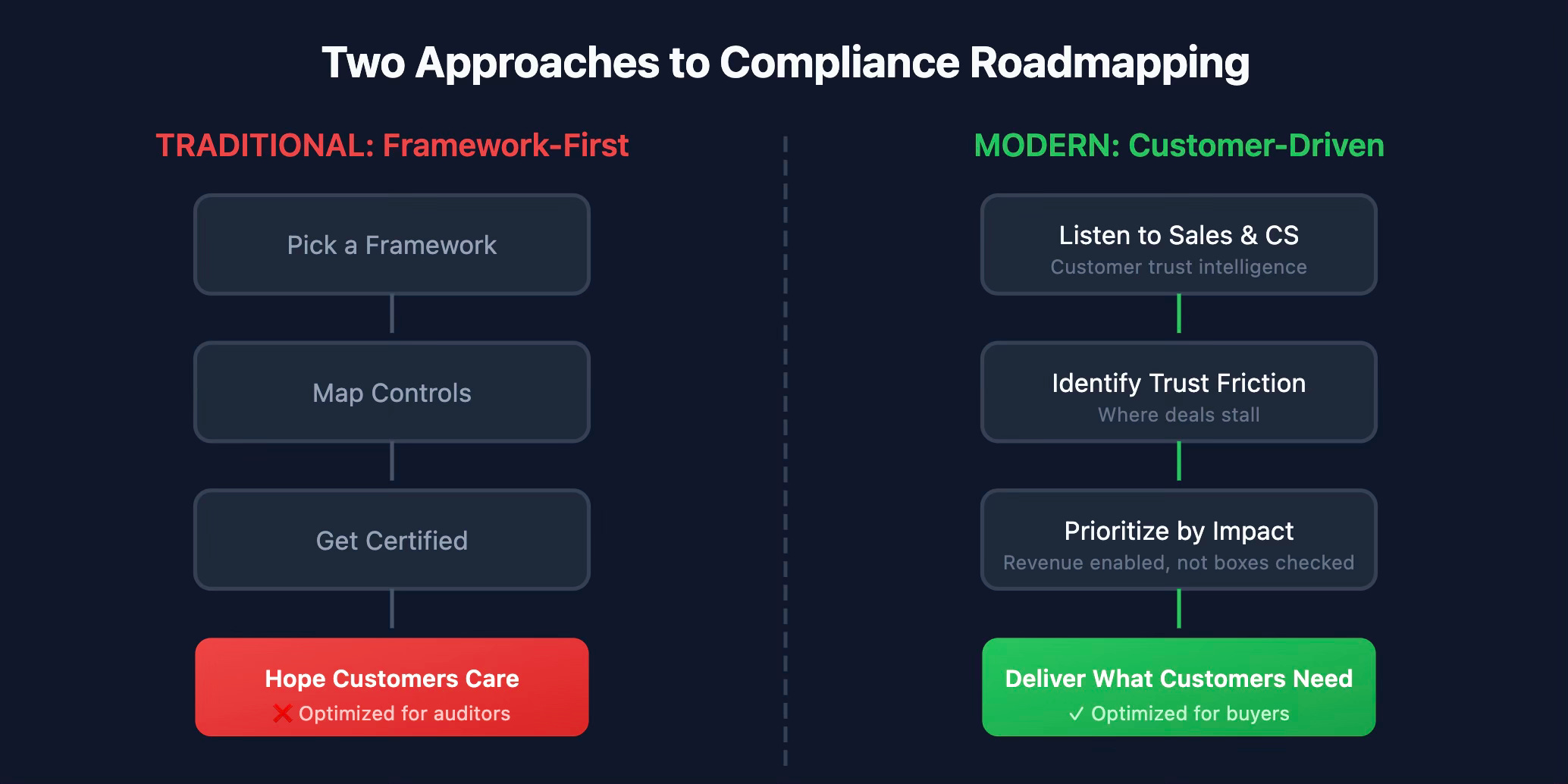
They start with a framework—SOC 2, ISO 27001, GDPR—and work inward. The logic seems sound: pick a standard, map the controls, close the gaps, get certified. Rinse and repeat for the next framework on the list.
But here’s the problem: that approach treats compliance as an internal exercise. It optimizes for auditors, not customers. And in a world where trust is a competitive differentiator, that’s a costly mistake.
The companies winning on trust aren’t just checking boxes. They’re listening to what their customers actually need—and building compliance programs that deliver it.
The Intelligence Gap
Your sales and customer success teams talk to prospects and customers every day. They hear the objections, field the security questionnaires, and sit through the procurement reviews. They know exactly where deals stall, which competitors are winning on trust, and what certifications actually move the needle in your market.
That’s gold. And most GRC teams never see it.
Instead, compliance priorities get set in a vacuum. Leadership picks the next certification based on industry trends, analyst reports, or whatever the last lost deal mentioned in passing. The GRC team disappears for six months to implement it. Sales keeps struggling with the same objections. Everyone wonders why the new certification didn’t magically fix pipeline velocity.
The disconnect isn’t malicious—it’s structural. GRC teams are buried in control implementation and audit prep. Sales teams are focused on quota. Nobody’s job is to connect the dots.
Until you make it someone’s job.
Building the Feedback Loop
The fix isn’t complicated, but it requires intentionality. You need a consistent mechanism for customer trust intelligence to flow into your compliance planning process.
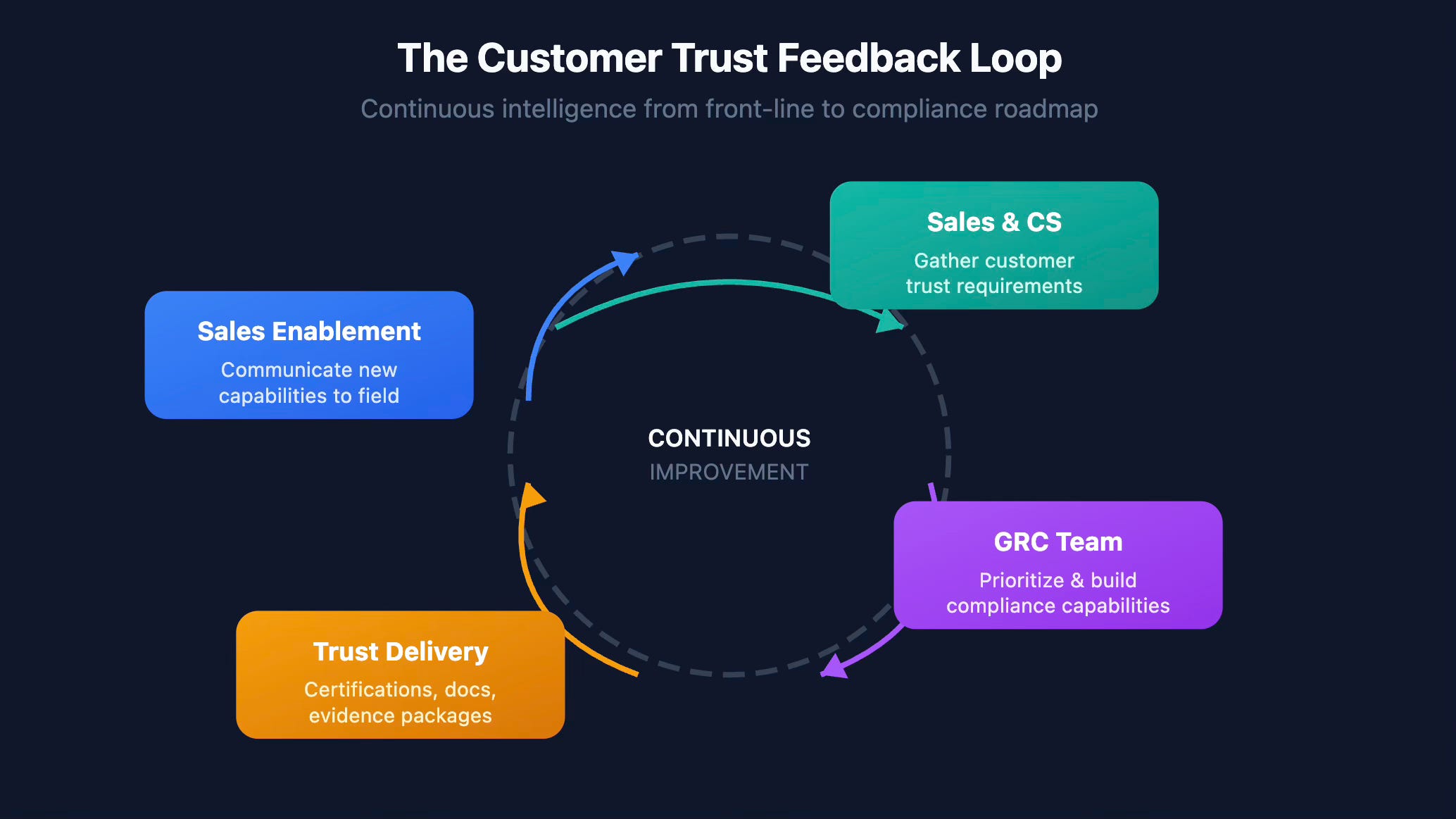
Start with the friction points. Work with sales leadership to identify where trust-related objections are killing or stalling deals. Not anecdotes—data. Which questions come up repeatedly in security reviews? Which certifications do prospects ask about that you don’t have? Where are you losing to competitors on compliance posture?
Categorize the asks. Not every customer request deserves a six-month implementation project. Some needs can be addressed with better documentation or a clearer explanation of existing controls. Others require net-new capabilities. Understanding the difference prevents overengineering and helps you move faster on quick wins.
Prioritize by business impact. This is where GRC earns its seat at the table. Frame compliance investments in terms of revenue enabled, deals unblocked, or market segments unlocked. A certification that opens up enterprise or regulated industry sales is a different conversation than one that checks a theoretical box.
Close the loop. When you ship a compliance capability that came from customer feedback, tell the sales team. Let them know what’s now available, how to position it, and where to find the evidence. This builds trust in the partnership and encourages more intelligence sharing.
From Cost Center to Growth Engine
The traditional view of compliance is defensive: avoid fines, pass audits, don’t get breached. That framing makes GRC a cost center—necessary but not strategic.
Customer-driven compliance flips the script.
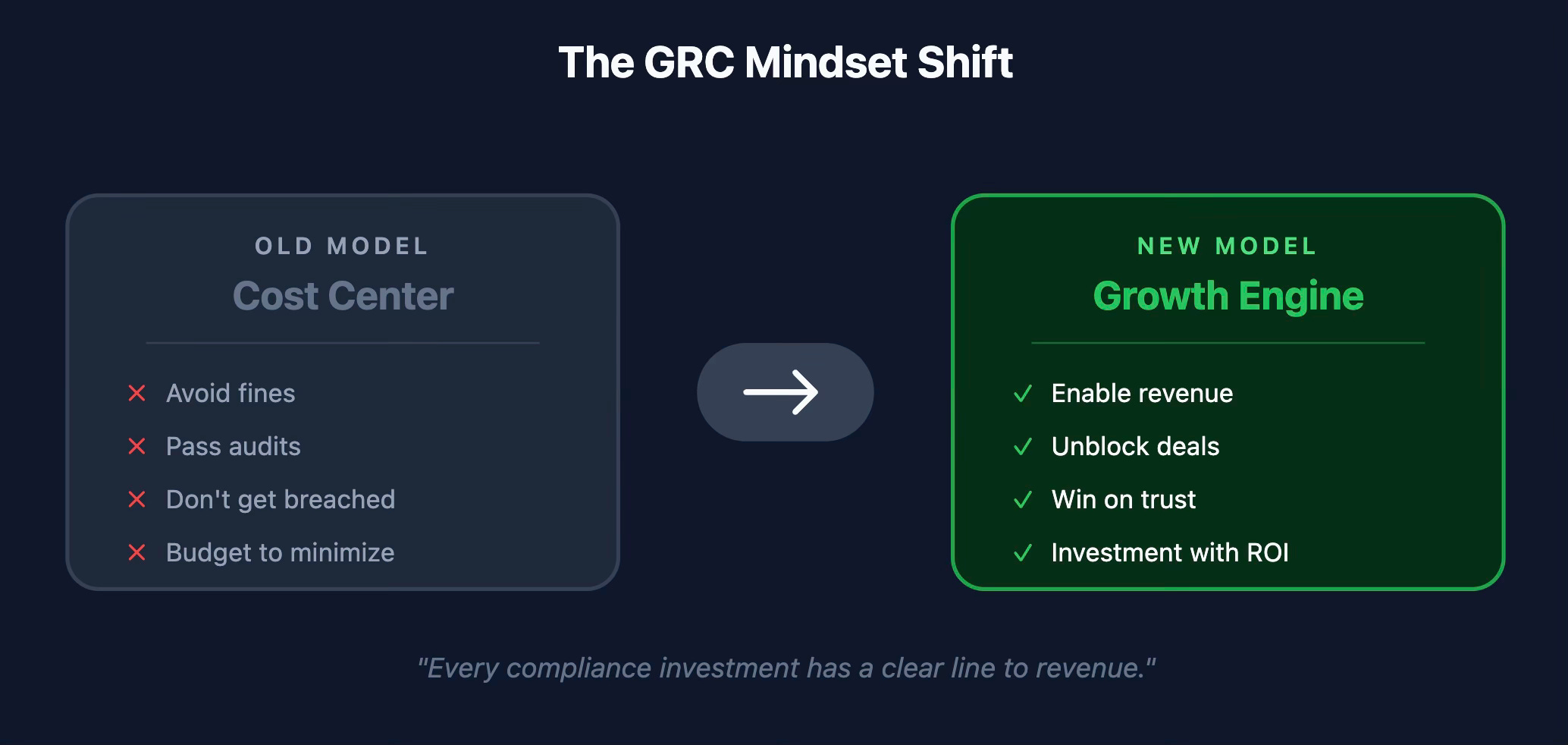
When your roadmap is shaped by real customer needs, every compliance investment has a clear line to revenue. You’re not just reducing risk; you’re removing friction from the sales process. You’re not just satisfying auditors; you’re satisfying buyers.
This changes how the business sees the GRC function. Instead of the team that says “no” or slows things down, you become the team that helps close deals. Instead of a budget line item to minimize, you become an investment with measurable returns.
That shift doesn’t happen overnight, and it doesn’t happen by accident. It requires GRC leaders to step out of the audit prep mindset and engage with the commercial side of the business.
The Partnership Model in Practice
What does this look like day-to-day?
It means GRC has a regular sync with sales leadership—not to review security questionnaire responses, but to discuss pipeline trends and trust-related blockers. It means someone from the compliance team occasionally joins customer calls during procurement reviews, not to answer questions on the spot but to hear what customers actually care about.
It means treating RFPs and security questionnaires as market research, not just administrative burden. Every question a prospect asks is a data point about what the market values. Aggregate enough of those data points and patterns emerge.
It means sharing your compliance roadmap with sales before it’s finalized, and actually incorporating their feedback. They might not understand the technical details of control implementation, but they understand which capabilities would help them sell.
And it means measuring success differently. Audit outcomes still matter, but so do metrics like: time to complete security reviews, win rate on deals with compliance requirements, and customer satisfaction with your trust posture.
Trust Is the Product
Here’s the mindset shift that ties it all together: in B2B SaaS, trust isn’t a byproduct of your product—it is your product.
Customers aren’t just buying your features. They’re buying confidence that their data is safe, that you’ll meet your commitments, and that doing business with you won’t create liability for them. The companies that understand this don’t bolt compliance on as an afterthought. They build it into how they operate, how they sell, and how they prioritize.
Your sales team is on the front lines of that trust exchange. They know what customers need to feel confident. The question is whether your compliance program is listening.
This is Part 1 of a two-part series on building trust as a business enabler. In Part 2, we’ll explore how to operationalize customer trust at scale—automating evidence delivery, building self-service trust infrastructure, and turning compliance from a gate into a growth engine.
This is very insightful. Thanks for sharing.